
Space science
How many years would it take to explore the universe while traveling at the speed of light?
The speed of light, equivalent to 299,792,458 m/s, is considered the maximum speed limit revealed by Einstein's theory of relativity.
Browse ScienceInfo articles and explainers related to Speed Light.
48 published items.
The speed of light, equivalent to 299,792,458 m/s, is considered the maximum speed limit revealed by Einstein's theory of relativity.


The speed of light is the fastest speed known to date.

The universe is vast with mysteries beyond human understanding, from the vast Solar System to distant galaxies billions of light years away.
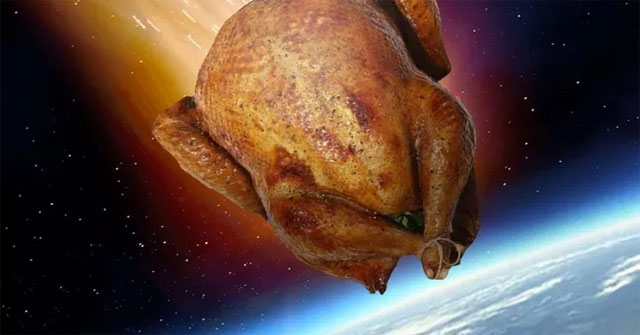
Even when traveling at 99.99% the speed of light, the damage the turkey caused to Earth was still enormous, thanks to the tremendous amount of energy it generated.

Recently, researchers from Poland and Singapore have proposed a new theoretical system of light that does not contradict Einstein's special theory of relativity.
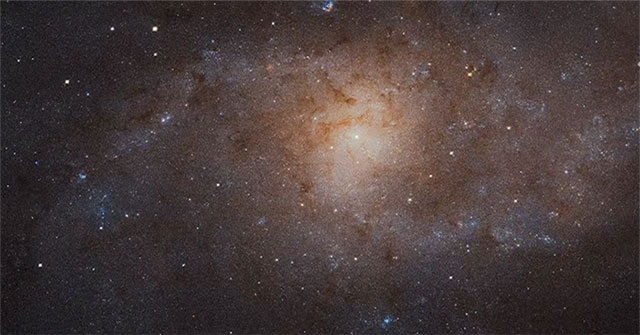
Perhaps this will remain a question for mankind forever, because we cannot answer it, but try to imagine if the universe had a limit, what would that boundary be like?

The research report shows a new version of the warp engine, without using materials that science cannot yet

The Pyramid's latitude has a number that matches the speed of light, is this a coincidence?
If sound is as fast as the speed of light, it can lead to unexpected disaster.
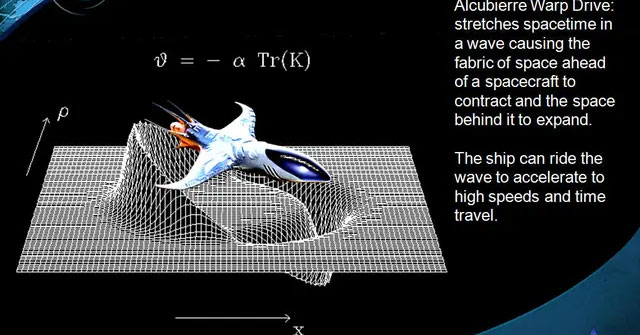
The beginning of an understanding of warp engines was in 1994, when theoretical physicist Miguel Alcubierre proposed the concept of a space-warping engine.

As far as we know, a person cannot travel at twice the speed of light. Einstein's theory of relativity seems to say that it can't happen, but what if it could? Some unus…
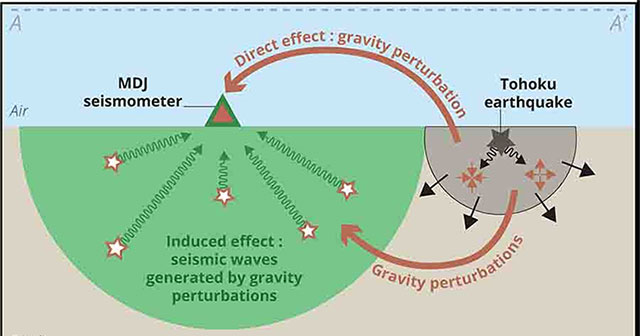
In fact, this method started to appear 4-5 years ago, however, a new algorithm set up to be deployed in Japan can identify earthquakes faster and more reliably.
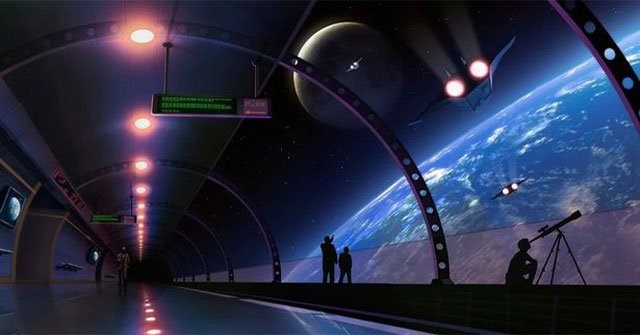
According to Manasvi Lingam and Abraham Loeb, two leading professors at Harvard University, supernovas can be used to push the speed of spacecraft to the speed of light.

A team of European scientists has found a way to transfer electrons in the semiconductor circuits at the femtosecond scale (1 billionth of a billionth of a second) by ac…